Paragliding full speed bar + brakes front collapse
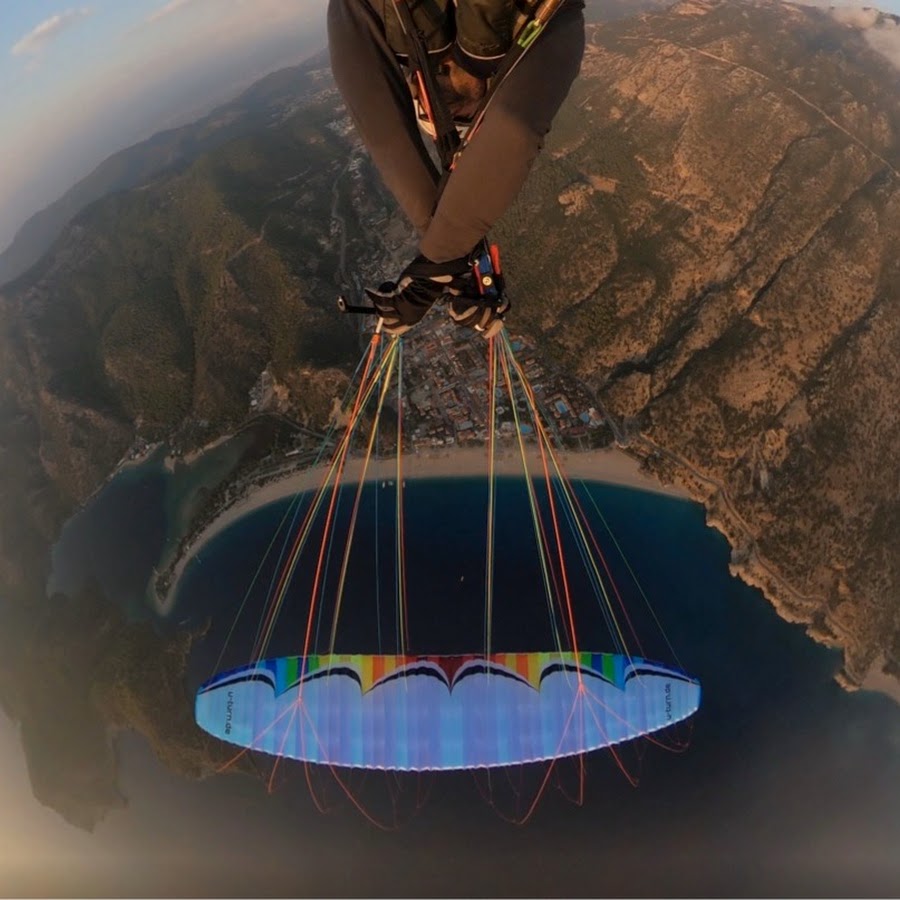
Testing intentional collapses by using brake input while on full speed bar
- Flying technique
- Safety
Inspiration from pilots
Creator
SIV demonstrations, acro manoeuvres and wing behaviour from instructor Kris Holub.
Videos: 15
Testing intentional collapses by using brake input while on full speed bar
I intentionally decided to see how far I could push an EN-D on pitch pendulum before it would collapse. It went every further and bigger than I expected steer only two cycles. Originally I wanted to look for other methods to induce collapses in SIV without installing collapse lines but I found this one to be a bit excessive for students.
Spin to backfly is my preferred exercise for introducing pilots to stalls for the first time. In my opinion, it allows for a more gradual progression and a more realistic and less intense exposure to how you may encounter a stall in the wild, compared to the classic SIV style "stall ball". The first part of spin to backfly starts with a simple quick spin, often called search for spin or spin appreciation. This in itself is a valuable drill for all pilots, even those who are not ready or do not want to do stalls. Visit beyondsiv.com to book a SIV/Acro course with me
Before you do this trick at a minimum you need: An acro glider or a freestyle glider which is specifically designed for infinite. Do not attempt this on a standard serial glider, it will not end well. You should be at a bare minimum comfortable with asymmetric sat and side-tumbling entries and anti-rhythmic exits. While not a specifically relevant pre-requisite, it really makes sense to have some degree of proficiency in helicopter and other negative tricks first. This trick, while conceptually straightforward, can be extremely high consequence for doing it wrong. Go easy and be conservative as you learn it.
If you are stuck in intermediate-level wingovers and are trying to polish your skills to manage full power, looping-style wingovers, this one is for you. If you are unfamiliar with the broader concepts of wingovers such as the use of outside brake or avoiding dangerous late turns, I recommend first watching my original wingover video as I do not cover these more basic concepts in this video. Original wingover video: https://youtu.be/Nx1P1l5Q_H4
This is a tutorial for exiting a spiral dive directly into a strong pitch, which is an exercise for pilots who have become confident with traditional spiral dive exits. It is a great drill for improving your comfort and understanding of spirals, and provides a useful progression for more advanced maneuvers such as exiting full stalls. Before learning this maneuver, make sure you are comfortable with strong spiral dives with a gradual exit first. I highly recommend learning all maneuvers on an EN-B glider first, and working your way up gradually with increasingly powerful exits. Steps: 1) Exit the spiral by fully releasing inside brake, and simultaneously applying a strong outside brake and weightshift input 2) Just before the glider rolls overhead, release the outside brake input and apply some INSIDE weightshift and brake back to the original spiral side with the goal to have the glider directly overhead with no roll motion 3) During the climb, go hands up and wait for the glider to arrive overhead 4) As the glider arrives overhead from behind, come into contact with the brakes and quickly but progressively apply both brakes until the glider stops PITCHING forward but is pitched forward, stationary relative to the horizon 5) When the glider is stopped in front of you, release the brakes quickly but progressively to fly away, being fully released before the glider arrives overhead Mistakes to avoid: 1) Work up gradually. Take less energy and use less aggressive outside inputs in the beginning. Avoid overdoing the exit input until you become familiar with the exercise. When in doubt, underdo the outside input and overdo the final inside input 2) As the glider pitches behind you, hands up all the way - do not brake during the climb 3) Brake as the glider arrives overhead but release once it stops moving forward. Do not hold the brake input until you swing under the glider
2 stage packing uses 2 separate bights of line to close the parachute bag, allowing the parachute to remain the bag until the lines fully deploy. Because most of the opening speed depends on having tension in the lines, the parachute still opens very quickly. By remaining in the bag until linestretch, the packed parachute is less vulnerable to entanglement with the glider and the most critical period of an unfolded but uninflated parachute is minimized. As you can see from the example videos at the end, the opening is nearly instantaneous once the lines are stretched. While different from the packing manuals from many parachutes, I personally use this method on all of my reserves and have had great performance every time without issue.
Demonstrating the effect of inducing an asymmetric collapse on full speed bar with brake input
Come join us to learn to thermal and fly cross-country in Colombia. Piedechinche is an incredibly consistent and beginner-friendly site, perfect for pilots who are just learning to thermal, dipping their toes into cross-country, or even pushing for their first 100km flights. We'll teach you everything you need to know to fly here and help you reach the next level in your paragliding journey.
How to perform a 2 stage stall for 2-line paraglider To book training with me, visit beyondsiv.com
This is my approach to working through the natural emotions of fear and anxiety in paragliding, particularly where they are found most commonly in SIV and Acro training.
One of the most dreaded malfunctions in paragliding is getting into riser twists, and for good reason. It's very easy to end up hopelessly twisted and has been the source of many reserve throws, a good portion of which I have added to personally. I've learned a lot of lessons on dealing with riser twists the hard way, so you don't have to. In this video I cover different strategies to escape from riser twists and dive into the most important details to help avoid having to throw your reserve if you encounter them.